


Renovating before selling can improve the outcome, but it does not turn every project into a profitable investment. In Barcelona, buyers compare photos, energy rating, kitchen condition and bathroom condition within seconds. Renovation works when it removes specific objections. If it only adds the owner’s taste, it can eat the margin.
The starting point should be sober: neighborhood price, real works cost, timeline, permits and tax position. The idealista price index for Barcelona helps benchmark the average price per square meter, while the Fotocasa series confirms pressure in the second-hand housing market. That pressure is not a license to inflate returns. It is a reason to choose better.
What adding value before selling means
A renovation adds value when it avoids a likely discount or lets the property compete with updated comparable homes. Painting damaged walls is not the same as installing a premium kitchen in an area where buyers will not pay for that extra. To set the ceiling, compare renovated and unrenovated properties through the idealista Barcelona report and cross-check the works budget with references such as Habitissimo renovation costs in Barcelona.
María Matos, Director of Research and spokesperson at Fotocasa, gives useful market context: Spain’s second-hand housing market is operating at demanding price levels, according to Fotocasa’s April 2026 housing analysis. A tight market is less forgiving with poorly presented homes, but it still does not pay for improvements above the comparable price.
If you cannot explain which buyer objection a renovation removes, it probably should not be in the pre-sale budget.
Priorities with the best cost-impact balance
The first investment bucket should cover paint, visible repairs, lighting, technical cleaning and small carpentry adjustments. These are modest, easy to quote and less exposed to major overruns. Habitissimo’s Barcelona renovation benchmarks help avoid blind quotes, and the idealista Barcelona price report helps decide whether the home needs only a presentation reset or a partial renovation.
I would avoid claiming a 200% ROI for paint or lighting because that is rarely attributable to a single line item. A real sale includes asking price, negotiation, photography, neighborhood demand and documents. The more defensible test is simpler: if a 2,000 to 4,000 euro refresh prevents a 10,000 euro discount caused by neglect, it did its job.
Order matters as much as budget. Fix first what buyers read as neglect: visible damp, broken switches, black joints, blinds that do not work, cold lighting and persistent smells. Then improve what appears in the first photos. Style decisions come last. That sequence prevents spending on attractive details while the real discount triggers are still alive.
Kitchen and bathroom: when to renovate and when to hold back
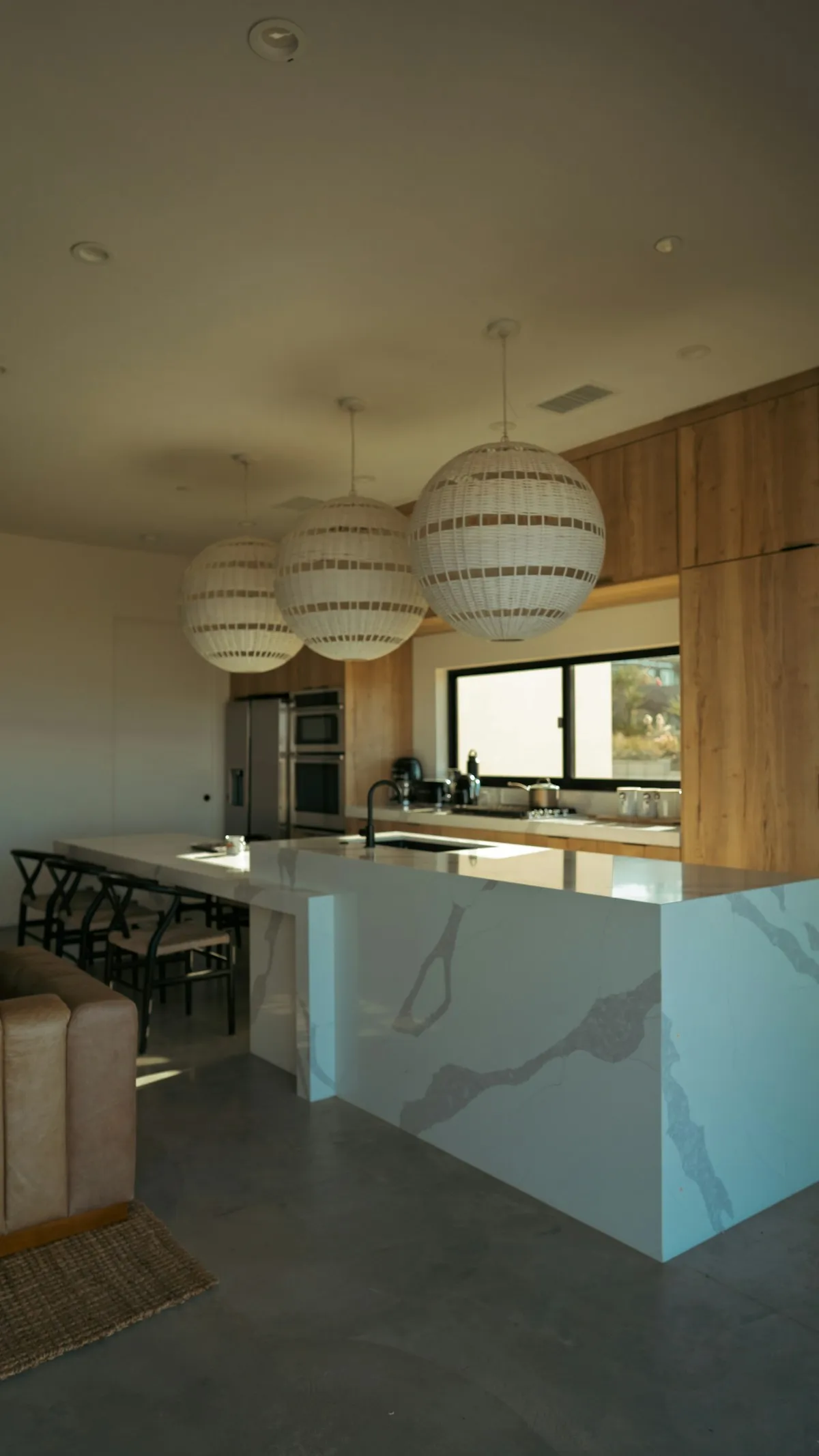
Kitchen and bathroom matter because they concentrate cost, disruption and perceived hygiene. If they are clean, functional and reasonably current, countertop, fronts, taps, shower screen or lighting may be enough. If they are twenty or thirty years old, a partial refresh often looks like a compromise. To frame the budget, use a general reference for renovations in Barcelona and a specific one such as the cost of replacing a bathtub with a shower.
The usual mistake is renovating as an owner, not as a seller. A buyer rarely pays more for the exact countertop color; the buyer pays to avoid immediate works and to feel that visible installations are not hiding problems. In small bathrooms, a shower tray, transparent screen and good ventilation usually matter more than showy materials. In kitchens, a clean layout and coherent appliances carry more weight than luxury finishes.
It also helps to separate commercial refresh from technical renovation. Changing fronts, painting tile or replacing taps can improve perception if the base is sound. If installations are old, ventilation is weak or damp is visible, cosmetic work works against you: the buyer sees the contradiction and suspects a hidden problem. In that case, it is often better to show a quote, explain the pending scope and price the home transparently.
Energy efficiency and tax rules: check before promising
The energy certificate is mandatory for sale and rental, and IDAE keeps specific guidance on building energy rating. That brings windows, insulation, efficient climate systems and heat pumps into the value conversation, but three effects should stay separate: future savings, better documentation and possible tax relief.
The Spanish Tax Agency explains the deductions for energy-efficiency works, and Royal Decree-law 9/2024 in the BOE extended part of the fiscal framework. Precision matters here: the building-level energy rehabilitation deduction extends further than the individual-home deductions. Before using tax savings in a sale argument, check the works date, dwelling type, before-and-after certificates and who can actually apply the deduction.
For a sale, energy efficiency works best when it can be shown. A new window without invoice, updated certificate or explanation of improvement is just an expensive window. A documented intervention, with before-and-after certificate and tax treatment checked, helps negotiation because it reduces uncertainty. That may sound bureaucratic, but documentation matters in a mortgaged purchase.
A prudent simulation for an 80 m2 Barcelona flat
Take an 80 m2 flat with an old kitchen and bathroom, marked walls, poor lighting and a weak energy rating. I am not calling this a “real case” because without the file, invoices and closing price that would be fiction. The simulation is useful for ordering priorities: a light refresh may sit in the low thousands; a partial renovation with kitchen, bathroom, paint, flooring and windows can go much higher, depending on finishes and initial condition.
To avoid over-investing, cross-check three numbers: the area price ceiling in idealista, the national second-hand market pulse in Fotocasa and works costs in Habitissimo Barcelona. If the spread between renovated and unrenovated homes does not cover works, overruns and time, sell transparently with a discount. Some properties are more profitable that way than with a perfect renovation.
Renovations to avoid
The worst pre-sale renovations have one thing in common: they force the buyer to accept the seller’s taste. Intense colors, highly personalized finishes, closed home-automation systems, strange layouts or luxury above the neighborhood can narrow demand. The market may be strong, as Fotocasa shows, but buyers still compare against visible alternatives on idealista.
Legally weak works are another category to avoid: enclosing terraces without a license, touching common elements without permission or selling square meters that are not properly recorded. That kind of renovation can create issues in valuation, mortgage approval or negotiation. If there is a doubt about license, community approval or registered surface, solve it before spending on finishes.
How to order the budget
Start with diagnosis, not catalogues. First review target price, renovated competition, energy certificate, technical inspection if relevant, installation condition and visit friction points. Then split the budget into three levels: necessary to sell without a penalty, useful if the margin allows it and discardable because it is personal taste. Habitissimo and the Spanish Tax Agency are good first filters, although the final quote should always come from specific contractors.
A useful rule: reserve 10% to 15% for overruns and do not invest if the math only works when everything goes perfectly. A pre-sale renovation should survive normal negotiation, a conservative valuation and at least one surprise. If those three hits break the margin, the works plan is too aggressive.
Final decision before starting
The best renovation before selling is not the most eye-catching one. It is the one that lets the home be shown without apologizing for the kitchen, bathroom, light, smells, visible damage or energy consumption. In Barcelona, with prices available through idealista and pressure signals in Fotocasa, the margin is in presenting well, not promising magic returns.
Before commissioning works, ask for a valuation with two scenarios: sale as-is and sale after a bounded renovation. If the difference does not cover budget, taxes, time and overruns, the renovation is not an investment. It is expensive decoration.
Sources
- Deducción por obras de mejora de la eficiencia energética de viviendas
- BOE-A-2024-26915: Real Decreto-ley 9/2024
- Certificación energética de edificios
- Precio de la vivienda en venta en Barcelona
- El precio de la vivienda en venta sube un 11,3% interanual en abril
- Precio medio de reformas en Barcelona
- Cambiar bañera por ducha: precio y presupuestos